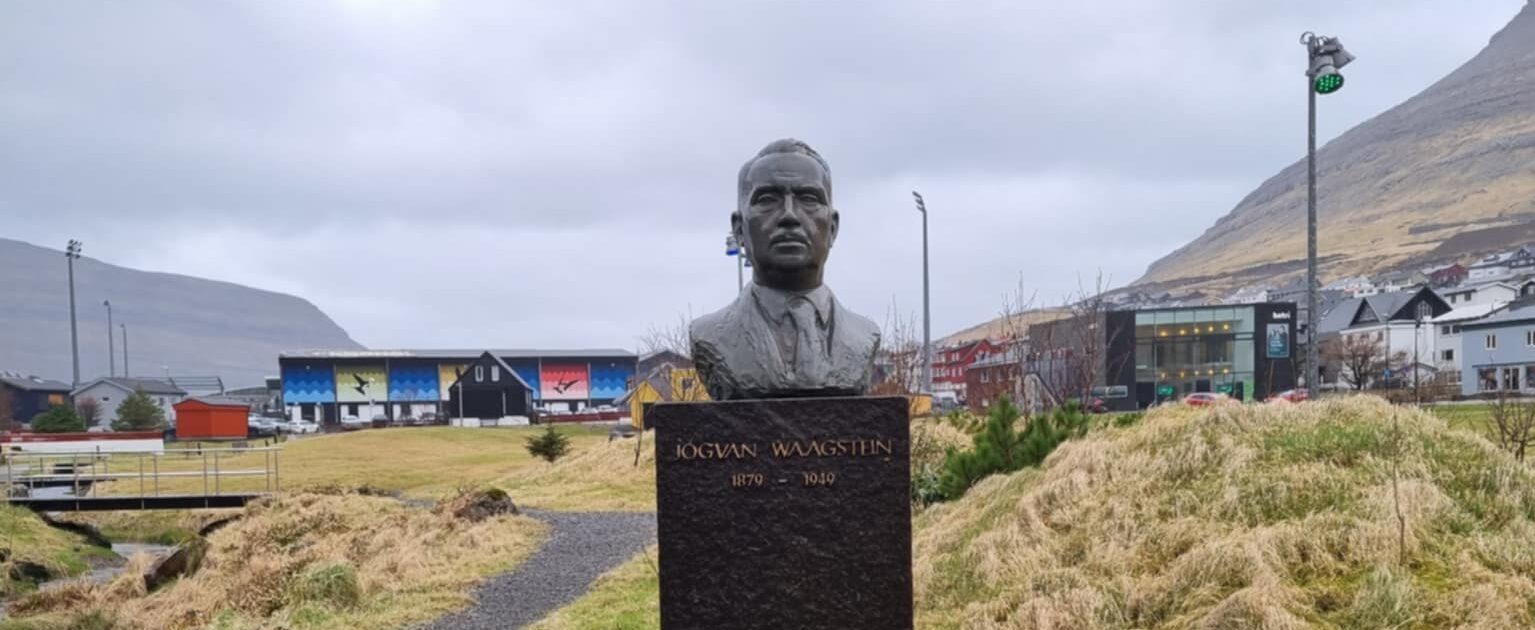
In 2019, Klaksvík unveiled a bust of Jógvan Waagstein. The monument honours one of the Faroe Islands’ most influential cultural figures. The ceremony was organised by Norðoya Sparikassi in cooperation with Klaksvík Municipality, and as a result, many local residents and cultural representatives gathered to celebrate his legacy.
Jógvan Waagstein was born in Klaksvík in 1879. From an early age, he showed strong artistic talent. Later, he trained as a teacher and devoted himself to education. However, teaching was only one part of his life’s work. Alongside his profession, he developed a deep commitment to music and painting.
Waagstein played a key role in Faroese music history. For many years, he served as organist at Tórshavn Cathedral. There, he helped shape church music in the Faroe Islands. In addition, he composed several well-known Faroese songs, including “Í búri”, “Tíðin rennur sum streymur í á”, and “Ein skortlitt kúgv við garðalið.” Today, these songs remain part of the national song tradition. Moreover, he transcribed and preserved traditional melodies. Through this work, he helped safeguard important elements of Faroese musical heritage.
At the same time, Waagstein built a strong reputation as a visual artist. He focused mainly on landscapes and village scenes. In particular, he captured the light and atmosphere of the Faroese countryside. As a result, his paintings reflect a deep connection to nature and everyday life. Furthermore, he created altarpieces for churches in Árnafjørður, Mikladalur, and Hov. In doing so, he contributed directly to both artistic and spiritual life in several communities.
Therefore, the bust in Klaksvík represents more than a tribute to one individual. It symbolises creativity, dedication, and cultural pride. Today, visitors and locals alike can pause by the monument. There, they can reflect on a man whose work continues to inspire new generations across the Faroe Islands.

 10°C
10°C
