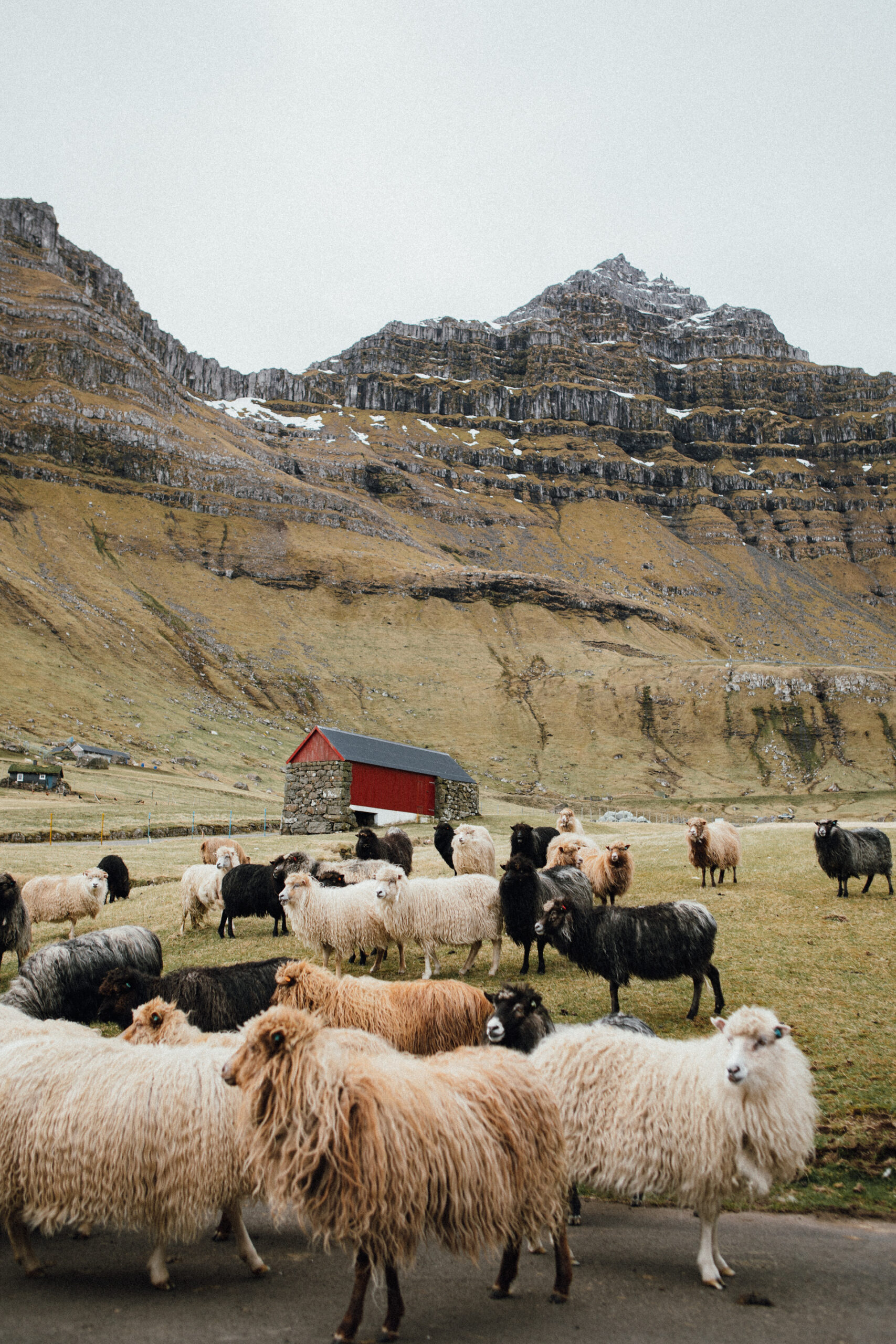
Sheep slaughtering is an important seasonal tradition in the Faroe Islands and reflects the islands’ long-standing, sustainable way of life. Each autumn, local communities come together for this centuries-old practice, which helps secure food for the colder months ahead. Although sheep greatly outnumber people, the Faroe Islands still import meat to meet demand, making local production both culturally and economically significant.
Locally produced lamb plays a key role in traditional Faroese cuisine, including dried lamb (skerpikjøt) and fermented lamb (ræst kjøt), both considered national delicacies. Sheep farming follows a natural annual rhythm: lambs are born in spring, sheep are shorn in summer, slaughter takes place in autumn, and mating occurs in winter.
After descending from the mountains, sheep are gathered into pens for sorting and shearing. Many farmers still prefer hand shearing, as it is quieter, requires no fuel, and works well in remote terrain.
Throughout the year, farmers carefully monitor their flocks. In autumn, lambs are slaughtered with skill and precision to ensure high-quality meat. Skins are tanned into leather, and organs, blood, and fat are used in traditional dishes such as blood pancakes (blóðpannukøkur) and fermented ram soup.
This respectful and resourceful use of the entire animal reflects a deeply rooted sustainability that has shaped Faroese farming for generations.
If you visit the Faroe Islands during slaughter season, consideration is essential. When hiking in the mountains in autumn, always check with local tourist information before setting out. Entering herding or slaughter areas unintentionally can scatter sheep and disrupt important work.
Many residents also value their privacy. Always ask permission before entering private land or photographing homes. A polite request is often met with warmth — and sometimes even an invitation for coffee and stories about local life.
The Faroese way of life is built on sustainability, where nothing goes to waste. By understanding and respecting these traditions, visitors gain a deeper appreciation of a culture that has sustained island communities for centuries — and enjoy a more authentic travel experience.
For more information on Faroese traditions and cultural practices, visit Visit Faroe Islands.

 10°C
10°C
