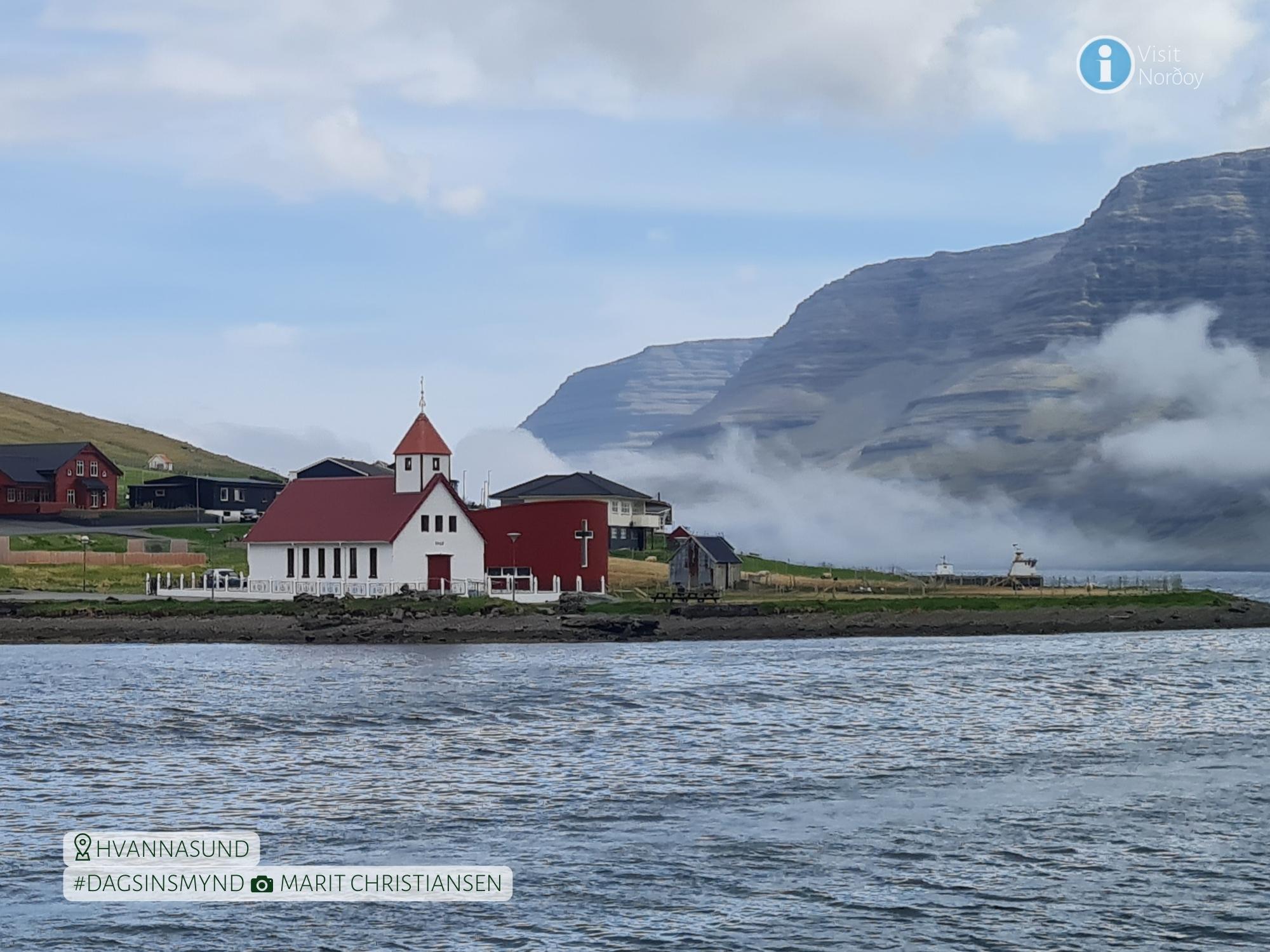
The Church of Hvannasund stands as a symbol of local dedication and community spirit. Residents built it themselves when no contractor stepped forward. Today, it remains an important landmark in the region.
In 1933, architect H.C.W. Tórgarð from Tórshavn prepared drawings and cost estimates for a new church in Hvannasund. Despite these early plans, construction did not begin until 1948.
The design stayed unchanged over the years. It included concrete walls, wooden interior paneling, and a corrugated iron roof. During construction, builders replaced the iron roof with asbestos, a common material at the time.
The church measures 22 alen (about 13.8 metres) in length and 12 alen (about 7.5 metres) in width. Windows line both sides of the building. The nave holds 100 fixed seats, with additional seating in the choir and gallery. The design drew inspiration from the church in Kirkja and combined traditional Faroese style with durable materials.
The church committee struggled to find a contractor. They advertised the project in newspapers, but no one submitted a bid.
Instead of delaying the project further, the people of Sund chose to build the church themselves.
Niels í Buð led the concrete work. Master builder Meinhard Poulsen and carpenter Jóaness Christiansen from Kirkja oversaw the woodwork. Their skills and determination moved the project forward and brought the church to completion.
Local workers completed the building in 1949. On 12 November that year, Martin Sivertsen from Hvannasund and Gunnar Krúnufjall from Norðtoftir inspected and approved the church. Their assessment confirmed that the building met all required standards.
The finished church became a proud symbol of cooperation and craftsmanship.
Today, the church serves the parish of Hvannasund, Norðdepil, Norðtoftir, and Múli. It remains an active place of worship and a cultural landmark for the surrounding communities.
Source: J. P. Gregoriussen, “Nýggjaru Kirkjurnar”; Fólkakirkjan
Hvannasunds kirkja holds services every Sunday and public holiday at 11:00.
For more information, visit the official Fólkakirkjan page.

 10°C
10°C
