 " loading="lazy">
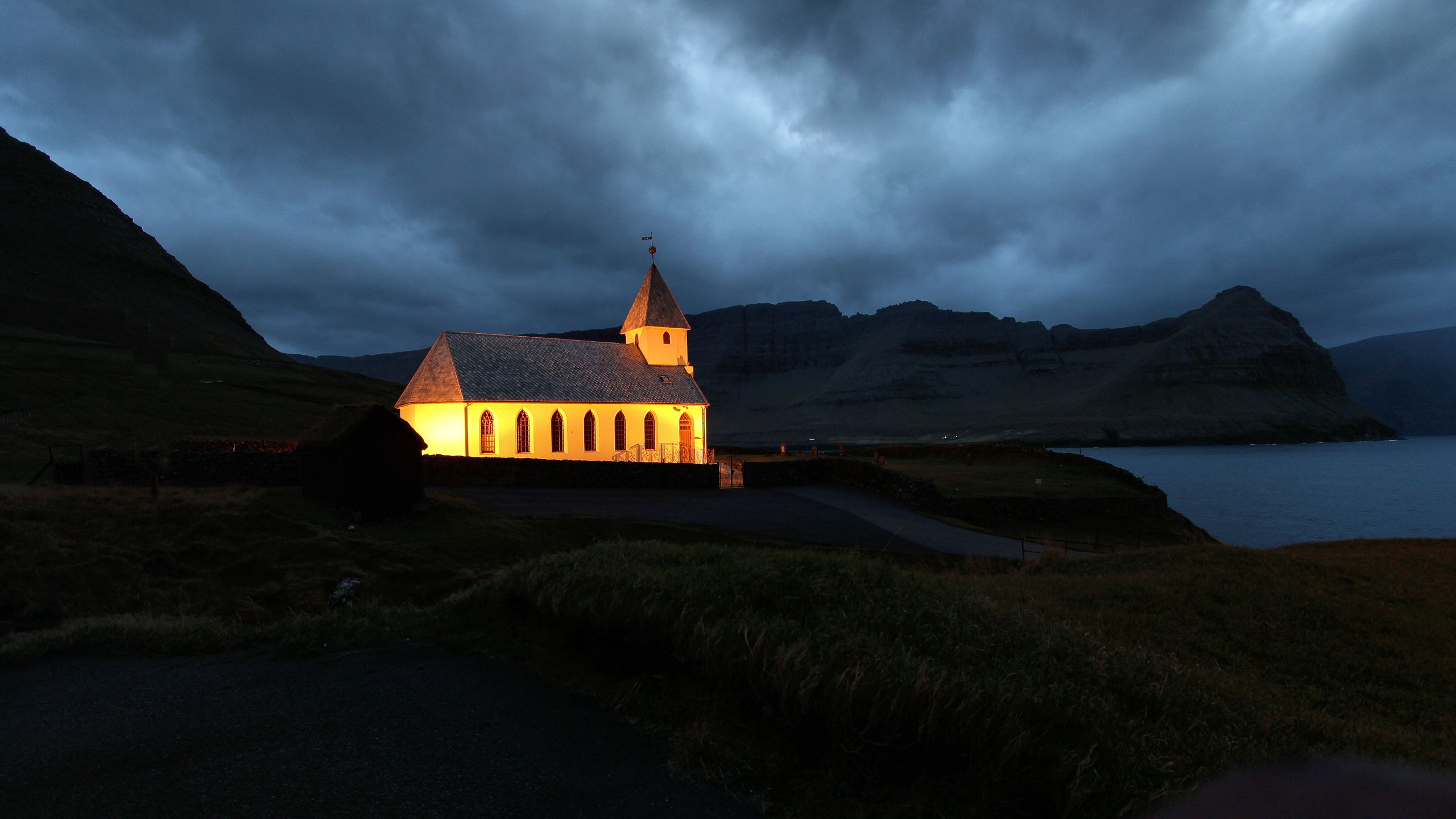
Viðareiði Church ranks among the most remarkable stone churches in the Faroe Islands. Builders completed it in the late 19th century, and it reflects both local craftsmanship and strong spiritual traditions. For more than a century, the church has served as a central landmark in the village of Viðareiði.
On 20 November 1892, J. Heinesen and S. Fr. Jacobsen inspected and approved the newly built church. Later that same day, Dean J. C. Evensen consecrated the building.
The weather allowed many villagers to attend the ceremony. The congregation walked in procession from the old church, built in 1831, to the new stone church. They carried altar items and sacred objects with them. Guests from across the Northern Isles joined the celebration, making it an important day in the village’s history.
A record from 1891 describes the church as a stone building measuring 28 alen (approximately 17.5 metres) in length and 12 alen (about 7.5 metres) in width. Builders covered the roof with slate and installed iron-framed windows. These materials ensured both strength and elegance.
The construction cost reached approximately 9,000 kroner. Jóhan Andr. Petersen from Mikladalur led the main building work for 8,000 kroner. Although workers carried out additional minor tasks, the final expenses remained close to the original estimate. The church opened on schedule and began serving its parish immediately.
Inside the church, visitors can see one of the oldest religious artifacts in the Faroe Islands. A crucifix from 1551 hangs on the north wall. Thomas Koppen of Hamburg donated it after receiving exclusive trading rights in the Faroe Islands in 1533.
This rare piece connects Viðareiði Church not only to Faroese history but also to European trade and religious heritage from the 16th century.

 10°C
10°C
