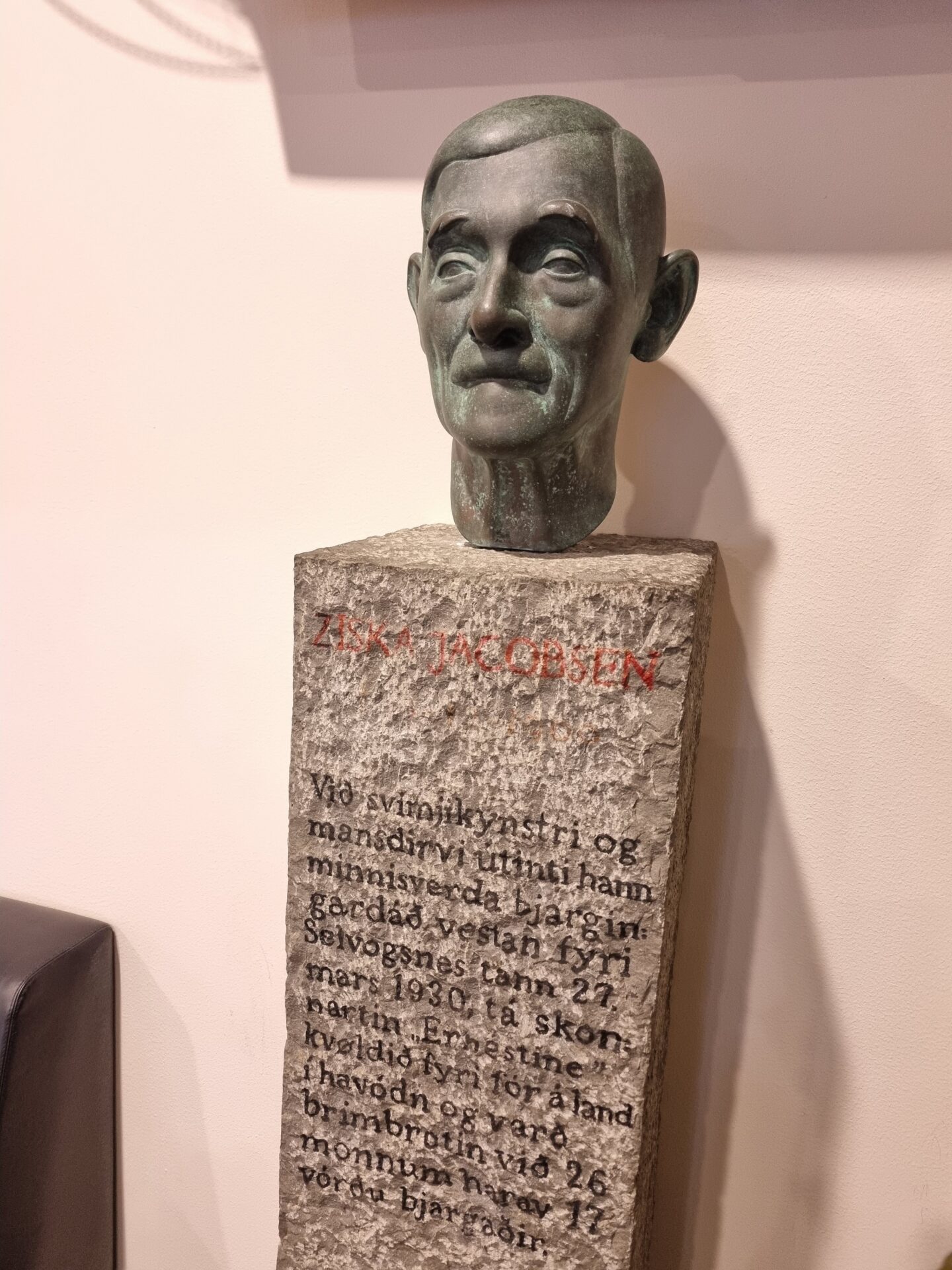
Located in the entrance hall of Klaksvík Swimming Pool, the bust of Ziska Jacobsen honours one of the Faroe Islands’ greatest maritime heroes. It commemorates his extraordinary courage during the tragic shipwreck of the schooner Ernestina off the south coast of Iceland on 26 March 1930.
When Ernestina ran aground in a fierce snowstorm, the crew faced enormous waves and freezing temperatures. After hours of struggling to survive, Ziska Jacobsen volunteered to swim through the icy sea. He carried a rope from the ship to the shore. Once on land, he secured the rope so the surviving crew members could follow. He then climbed the steep cliffs above the shoreline and lowered another rope. This made it possible for 17 crew members to reach safety. Nine men lost their lives in the disaster, making Ziska’s bravery even more remarkable.
The location of the bust is especially meaningful. Ziska learned to swim in the natural sea pool at Grøv, just outside Klaksvík. Those early swimming skills later enabled him to save the lives of his fellow crew members. Today, the bust welcomes visitors at the entrance to Klaksvík Swimming Pool. It reminds them of his heroic deed and highlights the importance of swimming in an island nation surrounded by the sea.
Although widely recognised for his courage, Ziska Jacobsen remained a humble man. He rarely spoke about the events of that tragic night. A recorded interview from 1971 reveals how deeply the disaster affected him throughout his life.
The bust is a tribute to Ziska Jacobsen and his remarkable courage. It also honours the many Faroese fishermen who faced the dangers of the North Atlantic. Today, it stands as a lasting reminder of resilience, sacrifice, and the strong connection between the Faroese people and the sea.

 10°C
10°C
